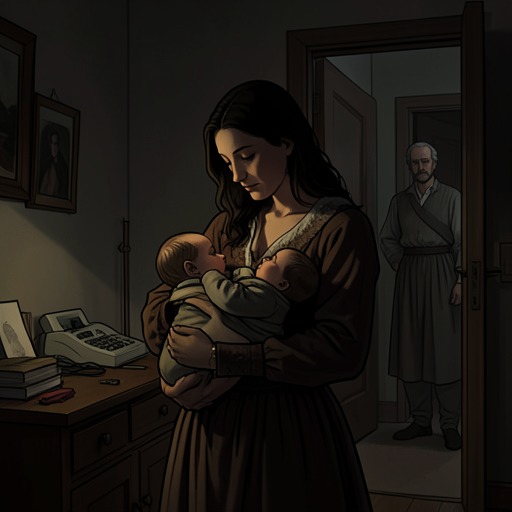
Amaia Rescues Ibai and Arrests Belástegui
Legado en los huesosAmaia Salazar’s rescue of Ibai and arrest of Doctor Berasategui turns a threatened ritual in the Arri Zahar cave into a dangerous standoff. She finds her son alive but exposed at the center of an arrangement made by Rosario and Berasategui; overcoming the childhood terror Rosario rekindles, Amaia forces the ritual to stop, secures the arrest, and takes Ibai to safety. Rosario escapes, because Amaia will not abandon either her child or the wounded Jonan Etxaide to pursue her.
Approach and Discovery
Amaia advances alone after leaving Jonan injured in the mountain, knowing that she cannot pause and that he cannot keep pace. Near the cave, she sees light from within, draws her Glock, and switches off her flashlight. She asks God for help and angrily appeals to the queen of storms before slipping around the narrow bend at the entrance, which forms a natural barrier. The approach is quiet enough that she first hears only clothing brushing and footsteps, then one of the small sounds Ibai makes. Relief that he is alive brings tears to her eyes, but she wipes them away and turns into the cave with her weapon raised.
The scene inside is both a rescue emergency and an apparent ritual. Ibai lies in the middle of an intricate pattern that looks as if it has been drawn in salt or white ash. Candles surround him; their warmth has kept the baby, wearing only a diaper, from crying with cold. Nearby stand a wooden bowl, a glass vessel, and a metal funnel. Rosario kneels beside him with a dagger, moving it over his stomach as if tracing invisible designs. She wears an open, oversized down jacket over black clothes, with her hair pulled into a bun. Doctor Berasategui leans beside her, smiling in fascination and reciting something like a song Amaia does not recognize. Ibai, unaware of the danger, plays with his feet.
Confrontation with Rosario
The sight makes Amaia’s hands sweat as she raises her weapon. She knows fear has returned before she enters and expects it to intensify when she faces Rosario. When Rosario looks up and fixes her dark eyes on her, Amaia is transported back to the age of nine: Rosario’s silent control seems to pull her toward remembered childhood places and the grave that once represented her power over her. The scene therefore brings the immediate danger to Ibai into contact with Amaia’s old fear of her mother.
Ibai’s soft whimper breaks that hold. His distress releases a rage that is both instinctive and clear-headed, and Amaia orders Rosario to drop the knife and move away from her son. Rosario begins to smile, then stops; Berasategui urges her to continue as if Amaia were not there, but Rosario has already turned her attention to the armed intruder. Amaia warns that she will shoot if they do not move away from the child. Rosario lets the dagger fall, then bends over Ibai and opens his diaper’s adhesive tabs, reacting with a groan when she sees him. The confrontation has interrupted the threatened act, but Rosario remains dangerous: Ibai’s crying grows louder, and she gives him a final look before advancing toward Amaia.
Arrest and Rescue
Amaia keeps her weapon trained on Rosario and orders her to stop. Rosario continues forward, while Amaia turns with her, maintaining her aim and watching Berasategui as the two women move through the cave in a tense shifting of distance. Rosario reaches the entrance and disappears. Amaia does not follow. Instead, she turns her attention to Berasategui, who approaches the cave mouth with a smile and raised hands. Amaia warns him that she will shoot if he takes another step. He stops.
Amaia orders Berasategui against the wall, throws him handcuffs, and tells him to put them on. He complies, raising both hands to show that he is restrained; when she orders him to his knees, he obeys with apparent reluctance. The arrest is controlled by short commands and watchful distance, not by a struggle. Amaia keeps him at gunpoint until she can reach Ibai.
She lifts the child from the ritual pattern, knocking over several candles. They remain lit on the floor as she presses him against her chest, wraps him in her clothes, and kisses him while checking that he is all right. Jonan calls from outside. Hearing his voice, Amaia answers with relief. She does not consider chasing Rosario through the storm: Jonan is injured and would otherwise be left guarding a prisoner, while Ibai still needs her. She checks her phone, finds no signal, and looks to Jonan. The immediate rescue and arrest are accomplished, but the lack of coverage and Rosario’s escape leave the outcome of the confrontation incomplete.
Stakes and Significance
The scene’s decisive reversal is that Amaia’s fear does not vanish; it is interrupted by her responsibility to Ibai. Rosario’s gaze briefly restores the childhood imbalance between mother and daughter, but the baby’s cry reorients Amaia toward the present danger. Her resolve is expressed not as freedom from fear but as action taken while afraid: she holds her aim, separates the adults from the child, and arrests Berasategui.
The rescue also defines the limits of what Amaia can do at once. She captures one participant and protects Ibai, but Rosario reaches the cave entrance and escapes. Amaia’s decision not to pursue is not a failure to recognize the threat; it follows from the immediate obligations of safeguarding her son and leaving neither the wounded Jonan nor the detained Berasategui unattended. The cave’s overturned but still-burning candles mark the interrupted ritual, while the phone without coverage and the storm beyond the entrance preserve the danger outside the scene’s hard-won moment of safety.